
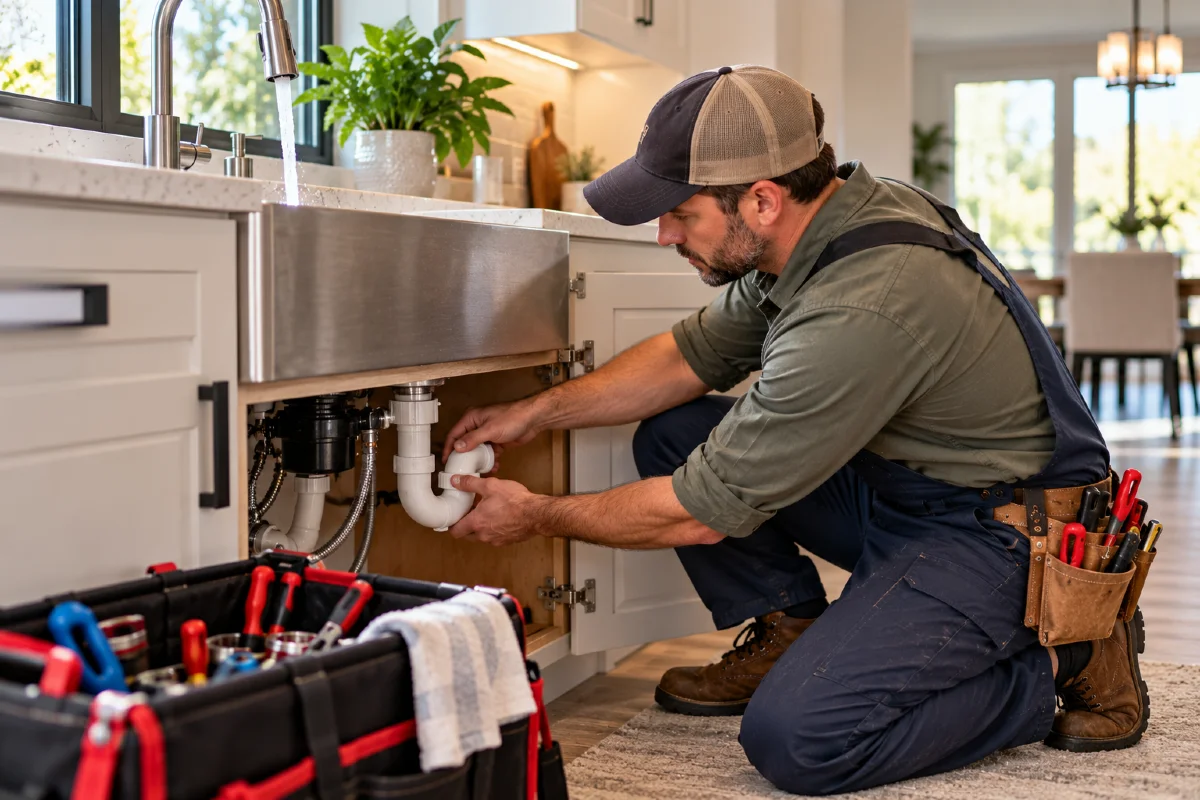
A drip beneath a sink can soak the cabinet base long before water reaches the floor. After a week, wood panels can swell, fasteners can rust, and a damp trap or supply line can leave a musty odor inside the cabinet.
A small ceiling spot can spread as water follows framing, insulation, or a pipe route above the room. A leak behind drywall may also raise the water meter reading without leaving a visible puddle.
We locate the water source before replacing a fitting or opening a wall. Leak repair should not wait where water is actively wetting drywall, flooring, cabinets, or framing, because the damaged area grows beyond the failed pipe or valve.
Wet cabinet and ceiling stain
Customers often call about a wet cabinet under the kitchen sink, a brown ceiling stain, a pipe that drips after the faucet is off, or water collecting around a toilet base. Other common signs include a hissing sound in a wall, peeling paint near a shower, and a water meter that moves while every fixture is off.
A loose supply connection, failed shutoff valve, worn wax seal, pinhole pipe, and leaking fixture can leave similar marks on a floor or wall. We inspect the source because these faults need different parts, access work, and repair plans even when the visible water looks the same.
Leak inspection and pressure test
We start with the wet area, nearby fixtures, exposed supply lines, drain connections, shutoff valves, and the water meter. We use a moisture meter to map damp drywall or flooring, then check static water pressure and watch for pressure loss after fixtures are isolated. Residential water pressure is commonly kept between 40 and 80 psi.
A basic inspection and accessible repair can often be completed in one visit, such as replacing a supply line, valve, trap washer, or pipe fitting. Opening a ceiling, removing cabinet panels, tracing a hidden line, or replacing a section of pipe may take longer. We explain whether a return visit is needed for wall access, drying, or an ordered part.
Shutoff valves and wall access
The repair scope changes with the failed part and its age. A leaking compression nut under a sink is different from a corroded pipe joint inside a wall, and older galvanized, copper, CPVC, and PEX lines use different fittings and repair methods.
Access also affects the work. A working shutoff valve lets us isolate one fixture; a seized valve may require water to be shut off elsewhere and the valve replaced. A fitting behind tile, a cabinet back, or a finished ceiling can require opening and later repair of the surrounding material. Some specialty cartridges, valves, and fixture parts must be ordered if the correct model is not available.
Fixture model and pipe access
Tell us which room has the leak and which fixture is involved, such as the kitchen sink, upstairs bathroom, laundry box, or water line behind a refrigerator. If water is running now, note whether it appears only during use or continues after the fixture is off.
A faucet, toilet, or valve may have a make and model number on its body, underside, trim plate, or installation paperwork. Let us know the approximate age of the fixture and whether the shutoff valve is reachable inside the cabinet or behind an access panel.
A photo of the wet pipe, valve, or ceiling area can help us identify likely fittings before the visit. Call Cedar Park Plumbing Company at (512) 986-2512 before a wet cabinet, ceiling stain, or wall cavity takes on more water.
Looking for something else? Try toilet repair or the home page.