
Gurgling from the sink, a sewer smell near the shower, or water rising in a tub can point to a blocked drain. The problem may sit in the trap, the branch line, or farther along the pipe.
Soap film, grease, hair, wipes, and food scraps can catch inside a pipe. Water then drains slowly, pushes air through another fixture, or returns through a lower opening.
A slow bathroom sink can sometimes wait for a scheduled visit. A toilet, shower, or floor drain that backs up should not wait, because wastewater can overflow into the room and spread beyond the fixture.
Drain gurgling and sewer odor
Customers often report a sink that drains slowly, a shower pan that fills around their feet, or a toilet that bubbles while the washing machine drains. Others notice a sewer odor at the kitchen sink, bathtub, or laundry standpipe.
Water coming up through a shower drain is different from a single basin that empties slowly. A gurgling toilet can also indicate air moving through a blocked line rather than a fault inside the toilet tank.
These symptoms can sound alike from the room, but they may come from different blockages in different sections of pipe. Each fault can require different access, tools, and a different charge.
Line inspection and cable work
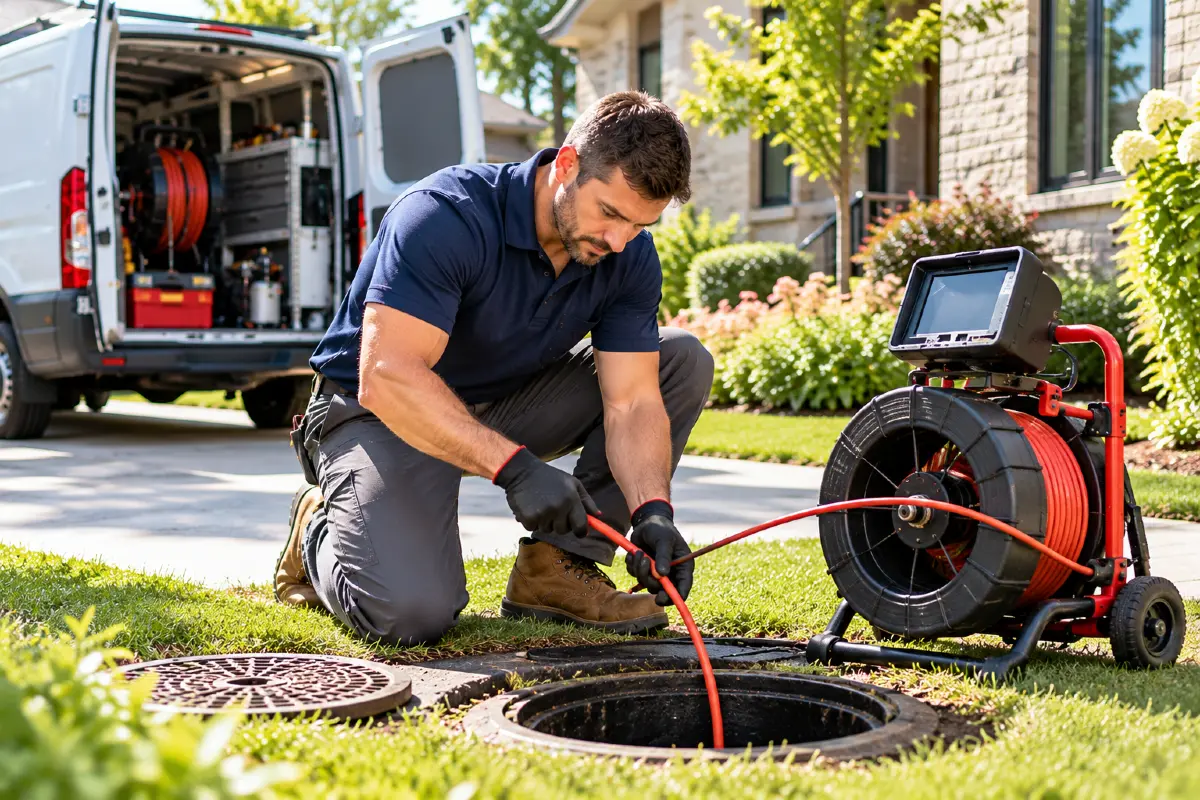
We start at the affected fixture, trap, and visible cleanout. We check water movement, listen for air at nearby fixtures, and note whether the blockage is on one branch or farther down the line.
We measure the accessible pipe opening and cable travel before selecting a cutter or retrieval head. A straightforward fixture blockage is often cleared during the same visit, and inspection with cable work commonly takes thirty to ninety minutes.
We can replace a damaged cleanout cap or gasket if the matching part is available. A blockage beyond the accessible line, a collapsed pipe, or camera locating is usually booked as additional work.
Cleanout access and pipe material
The cleanout location and pipe material affect the work involved. An outdoor cleanout at ground level gives direct cable access, while a cleanout behind a wall, under a deck, or inside a crawl space takes more preparation.
Older cast iron, brittle plastic, and corroded cleanout threads need careful handling. A seized cap, damaged thread, or missing access point can change the route we use to reach the blockage.
The line route also matters. If a pipe needs opening, replacement, or work in a shared building, property approval, sign-off, or an ordered part can add coordination beyond the clearing visit.
Cleanout location and fixture
Tell us which room has the slow or backed-up fixture, such as the kitchen sink, shower, tub, or laundry drain. Let us know if another fixture gurgles or rises while that drain is running.
If you can see a cleanout cap, tell us whether it is outside, in a garage, under a sink, or in a crawl space. Mention whether water is standing in the basin, shower pan, or floor drain now.
A photo of the pipe opening or cleanout area can help show the access before the visit. Call Cedar Park Plumbing Company at (512) 986-2512 if water is backing up, since standing wastewater can spread from a shower pan or floor drain into the room.
Looking for something else? Try water heater repair or the home page.